Neighborhoods Of Golden Valley: Parks, Golf And Quiet Streets
May 14, 2026
May 14, 2026
Looking for a suburb that feels calm and green without giving up quick access to Minneapolis? Golden Valley stands out for exactly that balance. If you are exploring where to buy in the west metro, this guide will help you understand how Golden Valley’s neighborhoods connect to parks, golf, trails, and everyday convenience. Let’s dive in.
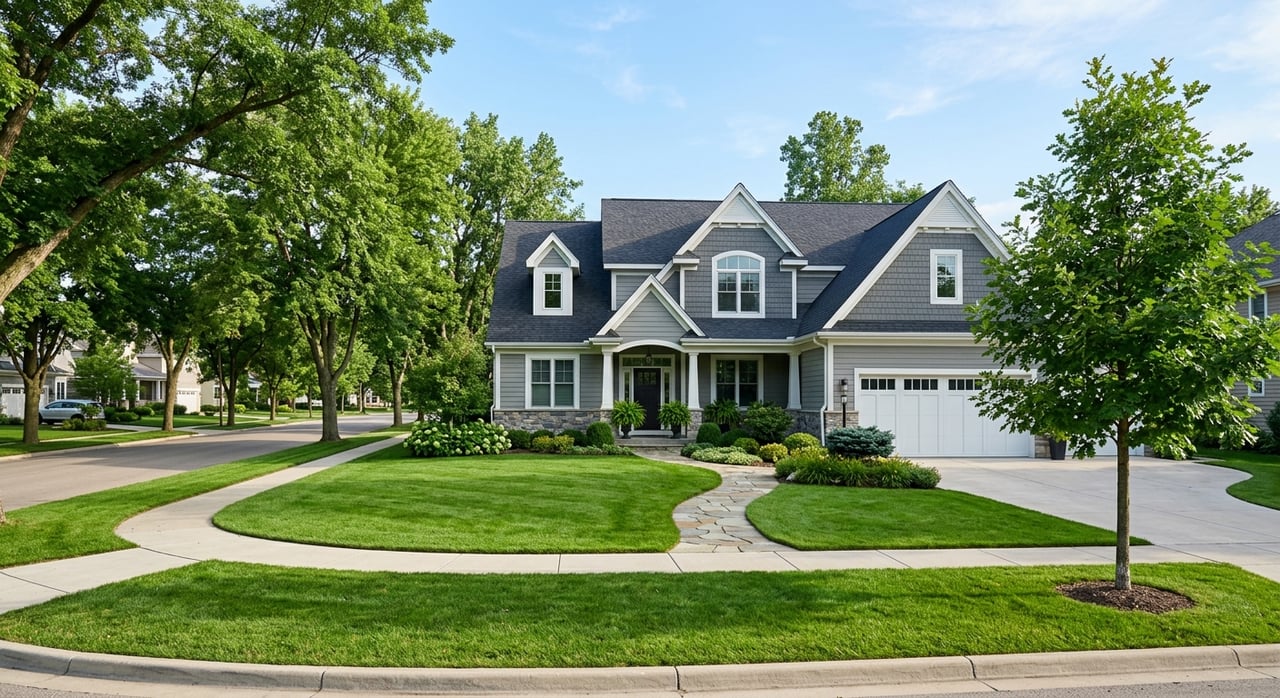
Golden Valley is a first-ring suburb about five miles west of downtown Minneapolis, with access from I-394, U.S. 169, MN 100, and MN 55. That location makes it practical for buyers who want a shorter commute while still enjoying a more residential setting. The city also describes itself as spacious and tree-filled, which matches what many buyers notice when driving its quieter streets.
A big part of Golden Valley’s appeal is how much land is dedicated to outdoor space. The city says about 15% of the community, more than 1,035 acres, is parks and open space, and it maintains nearly 50 miles of trails. Its long-range planning also emphasizes preserving parks and nature areas while improving multimodal connections across the city.
Golden Valley is an established suburb, not a place defined by large new subdivisions. The city is fully developed, so most future single-family growth is expected through infill, lot splits, or teardown and rebuild activity rather than brand-new neighborhood expansion. For you as a buyer, that usually means mature lots, established streets, and a housing stock with a long local history.
The housing mix is broad enough to appeal to different lifestyles. City studies describe Golden Valley as mostly single-family homes or large apartment buildings, while also showing a meaningful number of townhome, condo, cooperative, and detached townhome communities. If you want a classic residential block, you will find that here. If you want an association-maintained option, you will find that too.
The age of the housing stock also shapes the character of the city. The 2023 housing analysis found that 60% of total housing stock and 74% of single-family stock were built before 1970. Single-family homes accounted for 82% of resale volume, and one- and two-story homes made up 84% of active single-family listings, so the streetscape is largely defined by lower-rise homes in established settings.
If park access is high on your list, the eastern edge of Golden Valley deserves a close look. Homes near Theodore Wirth Parkway, Golden Valley Road, and Highway 55 have some of the strongest direct connections to major green space. This part of the city is especially appealing if you want recreation to feel woven into daily life.
Theodore Wirth Regional Park offers a wide range of amenities. It includes Wirth Golf Club, Wirth Par 3, disc golf, The Trailhead, Quaking Bog, off-road cycling trails, and a year-round trail system. In winter, the park also has 14 miles of groomed ski trails, which gives this area year-round recreational value.
The setting here tends to feel established rather than newly built. Because Golden Valley is fully developed, this area is more about existing homes and mature blocks than about new subdivision inventory. For buyers who value nearby parkland, tree cover, and a settled neighborhood feel, that can be a major plus.
Another key pocket is the area around Winnetka Avenue North and Golden Valley Road, which the city identifies as its downtown core. The downtown west district extends from Highway 169 to Golden Valley Country Club and is bounded by the Luce Line Trail and Highway 55. If you want a more central location within Golden Valley, this is one of the first places to explore.
Brookview is a major draw in this part of the city. It is Golden Valley’s largest park and includes lighted walkways and trails, tennis courts, and Brookview Golf Course just west of the park. The city is also studying better connections between downtown, Brookview, and the area south of Highway 55, which reflects how important this recreation hub is to the community.
Housing around the central core is somewhat more varied than in a purely single-family pocket. The city’s housing inventory includes condos and townhomes such as Villas on Bassett Creek, Wesley Commons, and Brookview Condominiums. In practical terms, that means you may trade a bit of privacy for easier access to amenities, trail connections, and central services.
On another side of Golden Valley, the Bassett Creek and Hidden Lakes area offers a different kind of appeal. This pocket stands out for planned trail connectivity and a more enclave-like housing pattern. If you prefer a quieter, more planned residential feel, this part of the city may be worth a closer look.
The Bassett Creek Regional Trail project is adding a paved off-road trail along Golden Valley Road between Regent Avenue and Theodore Wirth Parkway, plus a local trail on Duluth Street and intersection upgrades at Noble Avenue and Hidden Lakes Parkway. When complete, it will create a continuous off-street route from French Regional Park in Plymouth to the Grand Rounds Trail at Theodore Wirth Parkway. That is a meaningful benefit if walking, biking, or off-street trail access matters to you.
The housing inventory here includes Hidden Lakes detached townhomes and other townhome or condo communities such as Medley Hills, Hidden Village, Briarwood, Kings Valley, and Brookview Condominiums. These housing types tend to create a more planned residential pattern than traditional through-street single-family blocks. For some buyers, that can feel especially calm and manageable.
Golden Valley’s strongest lifestyle story comes from how these features work together. You are not just choosing a home here. You are often choosing how close you want to be to regional parks, trail systems, local golf, and the daily feel of the streets around you.
If you want the deepest connection to major parkland, the Theodore Wirth edge is often the best fit. If you want central convenience and easy access to Brookview amenities, the Winnetka and Golden Valley Road area offers a strong mix. If you want quieter, more planned residential pockets with trail access, the Bassett Creek and Hidden Lakes side may feel most comfortable.
| Feature | What the data suggests |
|---|---|
| Development pattern | Fully developed suburb with limited expansion land |
| Dominant resale type | Single-family homes, at 82% of resale volume |
| Housing age | Mostly established homes, with much of stock built before 1970 |
| Common home form | One- and two-story homes dominate active single-family listings |
| Other options | Townhomes, condos, detached townhomes, and a cooperative |
Golden Valley can be a smart choice if you want an established suburb with mature trees, strong park access, and straightforward access into Minneapolis. It also works well if you want options. Some buyers are looking for a traditional single-family home on a quiet street, while others want a condo or townhome near trails, golf, or central amenities.
From a home search perspective, it helps to look beyond the city name and focus on the pocket that best fits your routine. How often do you want to use trails? Would you rather be closer to Brookview or Theodore Wirth? Do you want a more classic block pattern or an association-maintained community? Those are often the questions that lead you to the right part of Golden Valley.
If you are thinking about buying or selling in Golden Valley, working with a local advisor who understands neighborhood feel, housing mix, and presentation strategy can make your next move much easier. For tailored guidance on Golden Valley and other west metro neighborhoods, connect with Carolyn Olson, Real Estate Agent.
If you have been thinking of selling your house and moving to a new home, condominium, or loft, she would be happy to help you market and sell your property, find a new home, and negotiate the best possible terms. If you are considering remodeling or renovating your home, she would be happy to help you assess the return on investment. She can even help you find the right architect, interior designer, builder, landscape architect, and craftspeople to make your project run as smoothly as possible.